 Skip to content

About LEGO Education
Hands-on STEAM solutions with LEGO® Education for all ages

Preschool & Kindergarden
For 4 - 6 years old

Primary
For 7 - 12 years old

Secondary
For 13 - 16 years old
LEGO® Education Science LEGO® Education Computer Science & AI


LEGO® Education Science
How Duck Learning Partners with Your School
More than just supplying kits, Duck Learning ensures a complete learning experience:
1. Solution Planning Support: We work closely with schools to identify the most suitable LEGO® Education Science solutions tailored to different age groups, learning objectives, and curriculum goals.
2. Educator Enablement: Our interactive training sessions equip teachers with the skills and confidence to deliver impactful, hands-on science lessons that spark curiosity and discovery.
3. Seamless Curriculum Mapping: We help integrate LEGO® Education Science into your existing Science and STEM programmes, enhancing experiential and inquiry-based learning.
4. End-to-End Assistance: From setup to sustained classroom use, Duck Learning provides continuous guidance and support to ensure long-term success in science education.
New Launched: LEGO® Education Computer Science & AI
How Duck Learning Supports Your School Beyond providing the kits, Duck Learning offers:
1. Implementation Guidance : Our education consultants help schools choose the right solutions based on age group, curriculum needs, and learning goals.
2. Teacher Training & Professional Development : Hands-on training sessions ensure educators feel confident delivering Computer Science & AI lessons in the classroom.
3. Curriculum Integration Support: We help schools align LEGO® Education Computer Science & AI with ICT, STEM, and future-skills programmes.
4. Ongoing Support: From onboarding to classroom adoption, our team supports schools at every step of their learning journey.
LEGO® Education Science: Drive better science outcomes. Inspire future innovators with our new, hands-on science kits.
LEGO® Education Science brings science to life through hands-on, inquiry-based learning. Using LEGO bricks, sensors, and guided lessons, students in Singapore explore real-world science concepts while building critical thinking, collaboration, and problem-solving skills.Aligned to modern classroom needs, it empowers educators to deliver engaging, future-ready STEM experiences with ease.
Beyond simply providing the kits, Duck Learning delivers a complete ecosystem of support to help schools successfully implement LEGO® Education Science. Our education consultants work closely with you to identify the most suitable solutions based on age groups, curriculum needs, and learning objectives. We empower educators through hands-on training and professional development, ensuring they feel confident delivering engaging, inquiry-based science lessons. Our team also supports seamless curriculum integration, aligning LEGO® Education Science with existing Science and STEM programmes. From initial onboarding to sustained classroom adoption, Duck Learning remains a committed partner providing continuous guidance every step of the way to ensure meaningful and lasting learning outcomes.

LEGO® EducationScience Kit K-2
# 45620

LEGO® EducationScience Kit 3-5
# 45621

LEGO® EducationScience Kit 6-8
# 45622
NEW: Computer Science & AI with LEGO® Education
At Duck Learning, we believe students should not only use technology they should understand how it works.With the launch of LEGO® Education Computer Science & AI, schools can now introduce students to the foundations of coding, data, and artificial intelligence through hands-on, classroom-ready learning.As an official LEGO® Education partner, Duck Learning supports schools in successfully implementing these future-ready solutions from product selection to teacher training and classroom integration.
Duck Learning goes beyond delivering LEGO® Education Computer Science & AI kits by providing end-to-end support for successful implementation in schools. From the outset, our education consultants guide you in selecting the right solutions tailored to your students’ age groups, curriculum requirements, and digital learning objectives. We equip educators with the confidence to teach coding, computational thinking, and AI concepts through hands-on training and professional development. Our team also works closely with schools to integrate these solutions into existing ICT and STEM frameworks, ensuring a smooth and meaningful transition. With continuous support from onboarding through to classroom adoption, Duck Learning ensures that schools are empowered to deliver future-ready, technology-driven learning experiences.
LEGO® Education Computer Science & AI : Meaningful Computer Science and AI Learning to engage all students with hands-on collaboration at the heart of every experience.

Computer Science & AI Kit K-2
# 45520

Computer Science & AI Kit 3-5
# 45521

Computer Science & AI Kit 6-8
# 45522
How LEGO® Education Helps
LEGO® Education creates meaningful, hands-on learning experiences that empower students to explore, question, and innovate. With LEGO® Education Science, students engage in inquiry-based learning where they investigate real-world phenomena, conduct experiments, and develop a deeper understanding of scientific concepts through active exploration. This approach nurtures curiosity, analytical thinking, and a strong foundation in scientific practices.With LEGO® Education Computer Science & AI, students are introduced to coding, computational thinking, and foundational AI concepts in an accessible and engaging way. Through building, programming, and problem-solving activities, they learn how technology works and how to create with it preparing them for a rapidly evolving digital world.
Together, LEGO® Education solutions foster critical 21st-century skills such as creativity, collaboration, communication, and resilience. Students become active participants in their learning, gaining confidence as they experiment, iterate, and solve challenges. The result is a more engaging classroom experience that not only supports curriculum goals but also equips learners with the mindset and skills needed to thrive in the future.
Preparing Students for an AI-Driven Future
The LEGO® Education Computer Science & AI solutions help students:
1. Understand how AI systems learn from data
2. Explore concepts like classification, patterns, and decision-makingDevelop coding skills including sequences, loops, conditionals, and variables
3. Build computational thinking and problem-solving abilities
4. Learn responsible and ethical use of AI
These solutions are designed for Year 1 to Year 9, providing a clear progression from foundational coding to advanced computer science concepts.
Read our resources

How STEAM Learning Improves Academic Performance
When learning feels meaningful and fun, students naturally perform better. At Duck Learning, we’re committed to helping schools and parents bring hands-on learning into everyday education through tools, training, and world-class STEAM resources.

The Ultimate Guide to Hands-On STEM Learning in 2026
2026 is shaping up to be a year where STEM education becomes more practical, playful, and purposeful. At Duck Learning, we’re proud to support schools and families in making STEM both accessible and exciting. If you’d like help choosing the right tools or setting up your classroom, our team is always here to guide you!
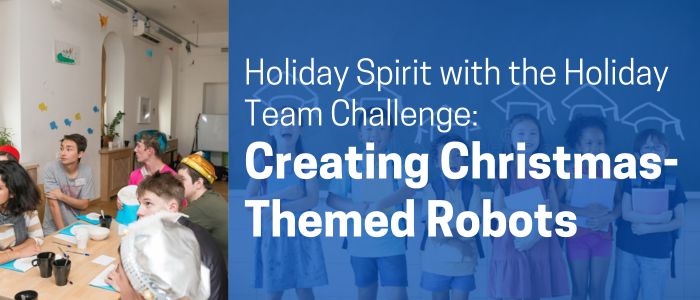
Holiday Spirit with the Holiday Team Challenge: Creating Christmas-Themed Robots
Spark Holiday Magic with Christmas-Themed Robots! Combine festive cheer with STEM innovation this Christmas by hosting a Holiday Team Challenge! Inspire creativity as kids design and build robots with LEGO® Education kits. From Santa’s sleigh to holiday light shows, it’s the perfect mix of learning and fun!
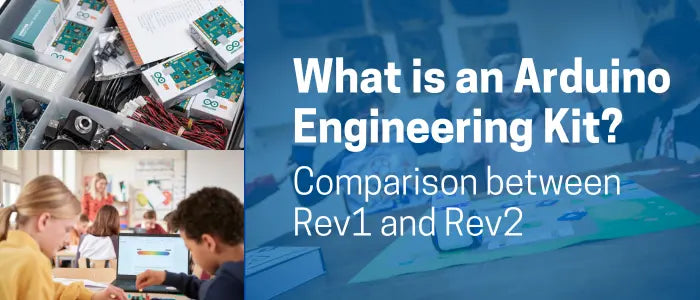
What is an Arduino Engineering Kit? Comparison between Rev1 and Rev2
Robotics and mechatronics with the Arduino Engineering Kit (Rev1; Rev2). This comprehensive educational platform is designed for students and enthusiasts to master practical engineering skills through hands-on projects. Learn to build and program real-world applications, bridging the gap between theory and practice using the versatile Arduino board. We compare the original Rev1 (featuring the MKR1000) with the advanced Rev2 (with Nano 33 IoT and MATLAB/Simulink integration) to help you choose the best project-based learning solution for mastering control systems, coding, and design.

Top Educational and Meaningful Gift Ideas for Children (2025) - STEAM Toys
An educational gift is a gift that keeps on giving. Help children fall in love with STEM Application, Arts and more when you let them have these gifts!
Helpful AI Tools for Students In 2025
AI is changing the game for students—from smarter studying and personalized tutoring to easy resume building and creative tools for projects. This guide explores 17 helpful AI tools for students in 2025 that every student should know, most offering free plans to help you learn, create, and succeed like never before.
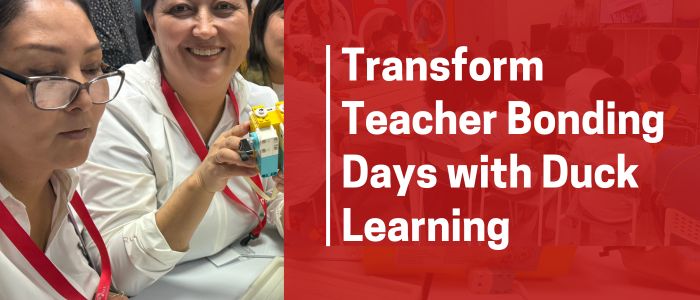
Transform Teacher Bonding Days with Duck Learning
Duck Learning offers unique team-building experiences for educators, blending LEGO® Education and Quarky AI activities to boost collaboration, creativity, and problem-solving. Our tailored programs ensure a fun, engaging, and impactful bonding day that helps educators strengthen their teamwork skills and brings valuable lessons back to the classroom.

Unlock Your Student’s Full Potential with Expert Education Consultancy in Singapore
Transform your child’s education with expert consultancy services in Singapore. We offer customised STEAM programmes for all levels, inclusive support for special needs students, personalised tutoring, and professional development for educators. Nurture critical thinking, problem-solving, and lifelong skills for academic and career excellence.
LEGO® Education in Competitions
LEGO® Education plays a significant role in fostering STEM education through its involvement in various competitions worldwide.
One notable platform is the FIRST® LEGO® League (FLL), where students aged 9 to 16 design, build, and program LEGO® SPIKE Prime and Mindstorms robots to complete specific challenges. Alongside the robotics game, teams engage in research projects, tackling real-world problems aligned with the season's theme. LEGO® Education supports FLL teams by providing kits and curriculum materials, encouraging hands-on learning and critical thinking. Through FLL, students develop essential skills such as teamwork, problem-solving, and innovation, preparing them for future careers in STEM fields.
In addition to FLL, LEGO® Education is involved in FIRST® LEGO® League Jr. (FLL Jr.), catering to younger students aged 6 to 10. FLL Jr. focuses on creativity and exploration, challenging teams to build LEGO® models that represent their ideas about a scientific or engineering concept. This competition emphasizes teamwork, communication, and presentation skills, nurturing students' curiosity and confidence in STEM subjects from an early age. LEGO® Education's support for FLL Jr. underscores its commitment to providing inclusive and accessible STEM learning opportunities for children worldwide.
LEGO® Education's participation extends beyond robotics competitions to initiatives promoting space exploration and STEM education. Partnering with organizations like NASA and ESA, LEGO® Education inspires students to explore space-themed challenges through hands-on activities and competitions. These initiatives not only spark students' interest in space science but also encourage them to apply STEM concepts creatively. By engaging in competitions and initiatives, LEGO® Education empowers students to become critical thinkers, problem solvers, and innovators, shaping the future of STEM education and inspiring the next generation of scientists, engineers, and explorers.
In Singapore, LEGO® Education is used commonly in FIRST® LEGO® League Singapore, National Robotics Competition and Global Robotics Games.
Shop LEGO® Education
History of LEGO® Education
When Kjeld Kirk Kristiansen assumed the role of CEO at LEGO® in 1979, he brought forward a visionary perspective, seeing the LEGO® brick not just as a construction toy but also as a tool for play and learning. This marked the genesis of a dedicated focus on educational endeavors within LEGO®.
In 1980, Kristiansen established the LEGO® Institutional Department, signaling a significant step towards integrating play and learning. This division catered specifically to educational institutions, emphasizing the importance of incorporating play into learning processes. It built upon earlier efforts dating back to 1949 when LEGO® introduced its initial bricks aimed at preschoolers.
Under various names such as LEGO® DACTA and LEGO® Educational Division, before adopting its current moniker LEGO Education in 2006, the division evolved its offerings. Over the years, LEGO® Education has provided a range of materials tailored for preschools, elementary, and middle schools, including teacher and student manuals alongside physical LEGO® sets designed to align with educational curricula.
For preschoolers, LEGO® Education utilized playful activities with DUPLO® bricks to foster early math, science, and language skills, emphasizing imagination, collaboration, and early coding concepts. Meanwhile, within school settings, the focus shifted towards subjects like math, science, technology, and coding/robotics, introducing products like LEGO® Technic to aid in understanding real-world science principles.
A pivotal moment occurred in 1984 when Kristiansen encountered Professor Seymour Papert from MIT on a Danish TV show, sharing his programming language, LOGO, for children. This encounter sparked a collaboration between LEGO® and MIT, leading to groundbreaking products like LEGO® MINDSTORMS in 1998, which became a cornerstone of STEM education, integrating hands-on robotics into learning.
The collaboration extended further through partnerships with organizations like FIRST, where LEGO® MINDSTORMS technology became integral to competitions like FIRST® LEGO® League, engaging thousands of children worldwide in STEM challenges since 1998.
LEGO® Education's impact reached even space, with collaborations with NASA and ESA, promoting STEM education through projects like sending LEGO® sets to space missions and organizing contests to inspire children's interest in space exploration.
Additionally, partnerships with esteemed entities like National InstrumentsTM, Tufts University, and Fraunhofer expanded LEGO® Education's reach, enhancing resources and fostering innovative educational approaches.
Through these initiatives and collaborations, LEGO® Education has continuously strived to make learning engaging and impactful, fostering active, collaborative, and lifelong learners.